






How to Connect Google Search Console to Claude with MCP
Connect Google Search Console to Claude with the Data Bloo MCP and ask about your clicks, impressions, CTR and rankings straight from the chat. No Google Cloud project, no OAuth JSON, no terminal, paste one URL and sign in. Here's the 2-minute setup.
The Data Bloo connector
Open the Data Bloo listing in Claude's directory, hit Connect and sign in. There's no server URL, no client ID and no API key anywhere in this setup. Everything below is just where to click.

What connecting Search Console to Claude actually means
You can ask Claude about your Search Console data and get a real answer, pulled from your actual property, in seconds. Type "which queries lost the most clicks last month" and Claude reads your numbers and tells you, no export, no report to open. The connection runs through the Data Bloo MCP, takes about two minutes to set up, and it's read-only.
Google doesn't publish an official Search Console MCP server. The ones that exist are open-source projects on GitHub, and they're capable, but every one of them asks you to create a Google Cloud project, enable the Search Console API, download an OAuth credentials JSON, edit a config file and run a server from your terminal. Data Bloo skips all of it: paste a URL, sign in once, ask in plain English.
Stop exporting Search Console. Start asking.
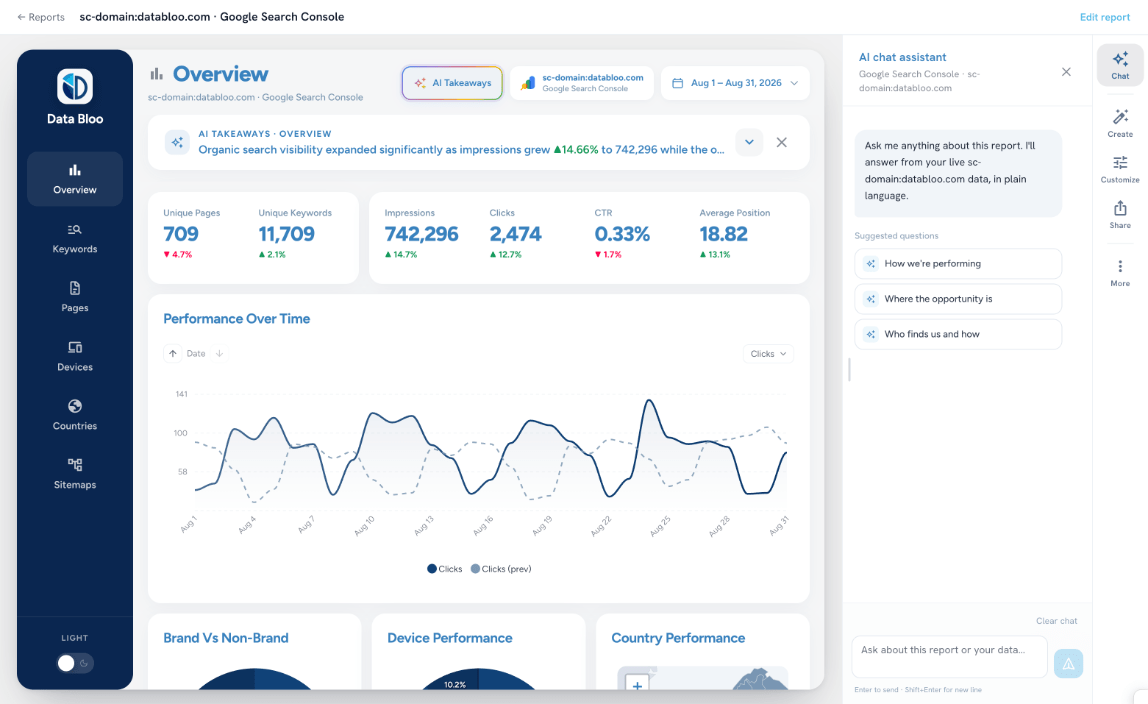
The same Search Console property you already trust for your Data Studio reports, now answering questions in a chat. No exports, no filters to rebuild every time.
Ask, get instant answers
"Which queries had the highest CTR last week?" Claude pulls the numbers and explains them.
Reports inside the chat
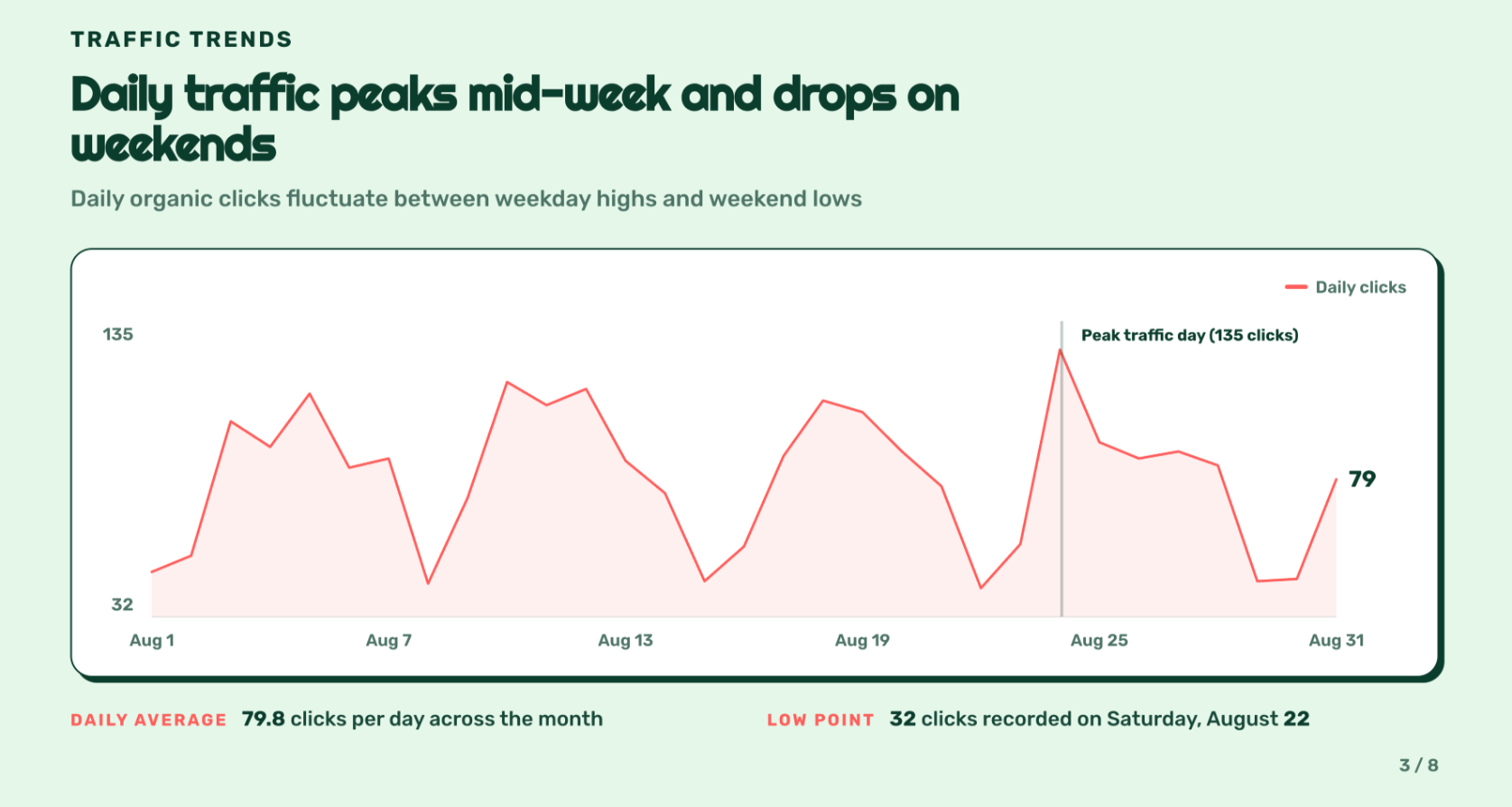
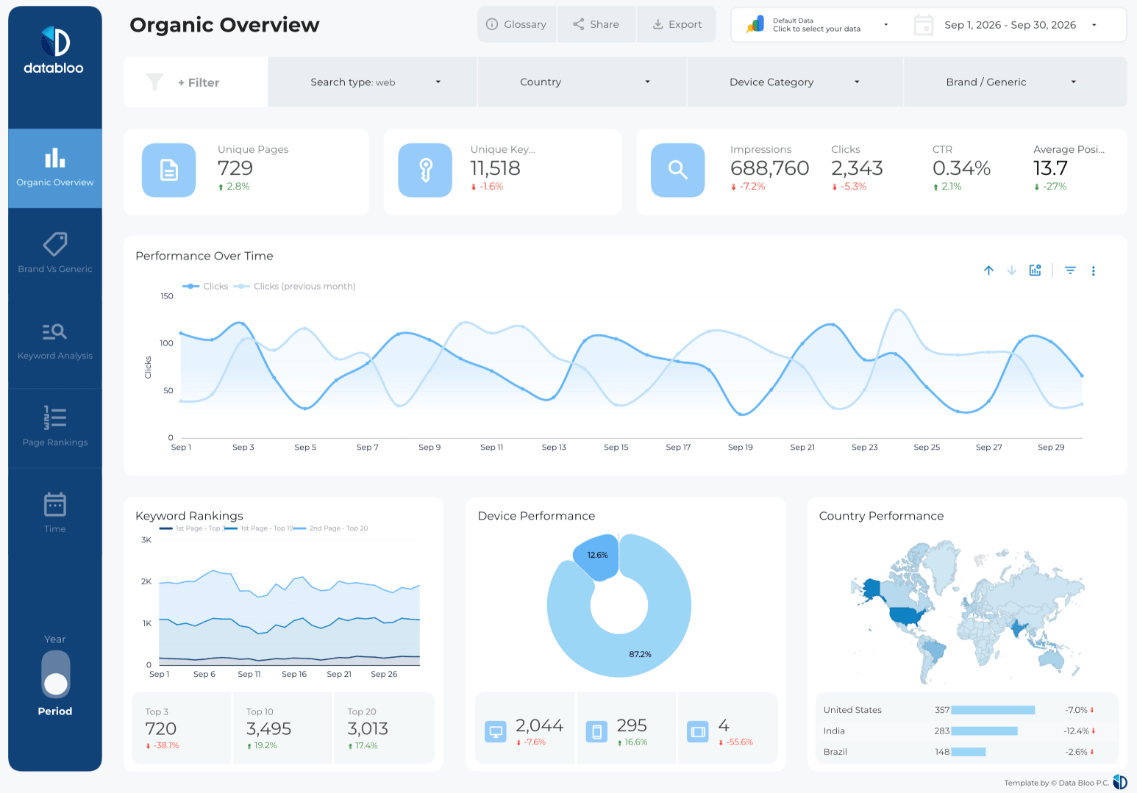
Ask for a 30-day organic view and get tables plus a summary ready to share, no Data Studio setup.
Client-ready summaries
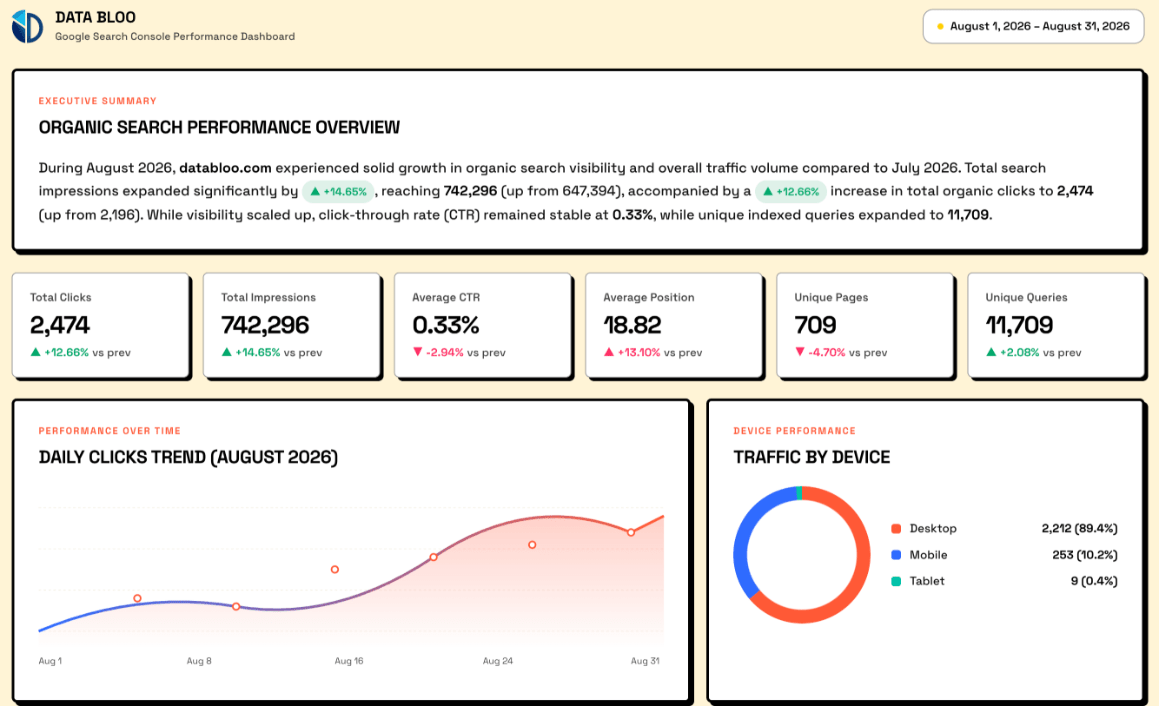
"Turn last month's organic performance into an executive summary." Paste it into Slack, email or a doc.
Diagnose traffic drops
"Why did clicks drop last week?" Claude looks across queries, pages and dates and finds what slipped.
Blend beyond Google
Line organic search up against Bing Webmaster, Facebook Ads, PageSpeed or your WooCommerce revenue in one answer.
Connect once, use everywhere
The same Search Console property you linked for Data Studio is instantly available to Claude, zero duplicate setup.
Search Console, plus every other connector
Already connected in Data Bloo? It's instantly available to Claude, connect once, use everywhere.
Three ways to connect Google Search Console to Claude
There are three real options, built for different people. Here's the honest version, including the case where the answer isn't us, so you pick the right one the first time.
A connector like Data Bloo
Paste one URL, sign in once, ask in plain English. No Google Cloud project, no OAuth JSON, nothing to host. Read-only, blends across channels, and the same connection feeds your Data Studio reports.
An open-source MCP server
Google doesn't publish an official one, but the community does, mcp-gsc and mcp-server-gsc are the two you'll find. Free and capable. The trade-off: you build a Google Cloud project, enable the Search Console API, download an OAuth JSON, edit a config file and run the server yourself.
A manual export
Export the Performance report, save the file, upload it to Claude. Free, and it works once. Then you do it again next week, separately for every property, and you rebuild every filter by hand.
Data Bloo vs an open-source MCP vs a manual export
The bottom line: if you're comfortable in a terminal and you want to own the whole stack, the open-source servers are free and genuinely good. If you'd rather never create a Google Cloud project, and you want organic search sitting next to the rest of your marketing, that's Data Bloo.
When to use an open-source MCP instead
Data Bloo isn't the right tool for everyone, and the open-source servers are genuinely good. There's no official Google Search Console MCP, but the community filled the gap: mcp-gsc is the best known, and mcp-server-gsc is the other one you'll see recommended. They're free, they talk to the Search Console API directly, and if you want to fork one and add your own tools, nothing here beats that.
The trade-off is the setup, and it's the same story every time. Before you can ask a single question you create a Google Cloud project, enable the Search Console API on it, configure an OAuth consent screen, download a credentials JSON, point a config file at it and start a server from your terminal, then keep that server updated. It also only sees Search Console, so it can't line organic search up against your ads or your store revenue, and it won't feed the Data Studio dashboards you already send clients.
So it isn't a safety question, everything here is read-only and none of it can touch your site. It's a question of who you are. If you're technical and you want to own the stack, take an open-source server. If you want an answer before the standup, take the one that's already hosted.
What you need
Three things, and you probably already have them.
How to connect Google Search Console to Claude
Pick your Claude client. Desktop & Web are easiest for most marketers; Claude Code is a one-liner for developers.
Go straight to Data Bloo in the Claude directory. You’ll see what it does and every source it supports.
Open Data Bloo in Claude →The Connect button sits at the top right of the listing. It works the same on claude.ai and Claude Desktop.
Claude opens Data Bloo’s sign-in page. Log in with your Data Bloo account and approve read access. Nothing in your accounts can be changed.
Try: "Using Data Bloo, show me my key metrics for the last 30 days and what changed." Claude returns a table plus a short analysis you can share.
Open your terminal and run:
claude mcp add --transport http databloo https://mcp.databloo.com/mcp
Next time you start a Claude Code session, Claude opens your browser to sign in to Data Bloo. Sign in once, the connection persists across sessions.
Run /mcp list, you should see databloo with status connected.
Confirm it works: in a fresh chat, ask "Using Data Bloo, list all the data source accounts I have connected." If Claude returns your accounts, you're fully connected.
Take the MCP for a spin
Walk through connecting Search Console to Claude and pulling a report, no signup, right here in the page.
Seven read-only tools, and nothing to install
You just ask in plain language, Claude picks the right tool. The typical flow: list_data_sources → get_connector_accounts → list_fields → query_data.
get_userlist_data_sourcesget_connector_accountslist_fieldsquery_datalist_accountsget_datesRead-only, always. Claude can pull and analyze your Search Console, it can never change a setting, submit a sitemap or touch your property. There is no write path to switch off, because there isn't one.
No setup tax and all your dashboards in one connection
Every other route to Search Console in Claude asks you to become a developer first, or to keep exporting by hand. Data Bloo asks for neither. It reads, it reports, and the exact same connection already powering your Data Studio dashboards now answers questions in Claude.
Nothing to install, nothing to host
No Google Cloud project to stand up, no Search Console API to enable, no OAuth JSON to paste into a config file, no terminal. You add one URL to Claude and sign in. All seven tools are read-only, so Claude can read and analyze your Search Console data but can't change a thing.
One connection, two surfaces
The Search Console source you built for Data Studio is the same one Claude reads. No second setup, no second bill, and the numbers Claude quotes always match the dashboards you send clients. It's the one thing a Google-Ads-only developer tool structurally can't give you.
What Claude actually gives you back
Three real prompts and the kind of answer Claude returns once Search Console is connected through Data Bloo, numbers, then a plain-language read.
Claude: 18,940 clicks from 612,400 impressions, a 3.09% CTR at average position 12.4. Clicks are up 7%, but impressions are up 19%, so you're being shown more and clicked proportionally less.
Claude: Fourteen queries. The biggest three, data studio connector (42,100 impressions, position 11.3), gsc report template (18,600, position 12.8) and marketing dashboard template (15,900, position 14.1).
Claude: Branded, 6,180 clicks at a 22.4% CTR, average position 1.8. Non-branded, 12,760 clicks at a 2.1% CTR, average position 15.2. Non-branded is 67% of clicks and 91% of impressions.
Example outputs shown for illustration; your figures come live from your own connected account.
What do you want to create?
Pick a format, a source and an account. Data Bloo uses AI to build it with your numbers and your branding.
 Data Studio
Opens a template in Data Studio, already connected to this account.
Previewing
Data Studio
Opens a template in Data Studio, already connected to this account.
Previewing
What Search Console data you can pull
Everything in the Performance report, plus a few splits the Search Console UI makes you build by hand.
Clicks, impressions, CTR and average position, plus unique keywords and unique pages, so you can see how wide your footprint is, not just how deep.
Top 3, top 10, top 20 and the rest, counted as real metrics, so "how many keywords crack page one" is one question, not a spreadsheet.
Query, page, path level, country, device, search type (web, image, video, news), search appearance, host and protocol, sliced by date.
A real dimension, not a regex you rebuild monthly, and short vs long-tail alongside it. Sitemap health (submitted URLs, errors, warnings) comes through too.
Ask Claude to list the fields for your property first, it confirms exactly what's available before it queries.
Prompts to paste into Claude
Once connected, drop any of these into a fresh chat. Name Data Bloo in your first message, then drill in.
Built for how you actually work
Same connection, different job to be done. Here's the prompt each type of marketer tends to start with.
Agencies
Pull and compare across every client property without switching logins, then draft the monthly SEO report in the chat.
E-commerce & DTC
Find the product and category queries you almost rank for, and line organic clicks up against store revenue.
Content & SEO teams
See which posts are decaying, which are climbing, and where a refresh pays back fastest.
Common issues and fixes
You're likely not signed in yet, or Search Console isn't connected in Data Bloo. Ask "Using Data Bloo, list the properties I have connected." If it comes back empty, open Data Bloo, confirm your Search Console source is connected, then try again.
These are two different properties in Search Console and they return different numbers. A domain property looks like sc-domain:example.com and covers every subdomain and protocol; a URL-prefix property looks like https://example.com/ and covers only that exact prefix. If a total looks too small, you're probably on the prefix one. Ask Claude which it's querying.
This one confuses everybody, and it isn't Data Bloo. Google anonymizes rare queries, ones not searched by more than a few dozen users over two to three months, and leaves them out of the query table to protect privacy, while still counting them in your totals. So the sum of your queries will always be less than your total clicks. Nothing is broken.
Search Console itself only keeps 16 months of performance data, so nothing downstream can go further back. If you want year-over-year comparisons beyond that, feed the data into a Data Studio report and let it accumulate.
Query notes & FAQs
It's free to start, no credit card. The free tier includes MCP access with usage limits; paid plans raise the limits and add more connected accounts.
No. All seven MCP tools are strictly read-only. Claude can read and analyze your performance data, but it can never submit a sitemap, request indexing, change a setting or touch your property in any way.
No. Google publishes an official MCP server for Google Ads, but not for Search Console. What exists is open source and community-built, mcp-gsc and mcp-server-gsc are the two you'll see recommended. They're free and good, but each one asks you to create a Google Cloud project, enable the Search Console API, download an OAuth credentials JSON and run a server from your terminal. Data Bloo is the hosted alternative: one URL, plain English, no Cloud project.
Any MCP-compatible client, Claude Desktop, Web and Code, plus ChatGPT, and Gemini. The same URL works across all of them.
Yes. As long as they're connected in Data Bloo, ask Claude to compare organic search against Bing Webmaster, Facebook Ads, PageSpeed Insights or your WooCommerce revenue, and it pulls one blended answer.
Claude queries your data live through Data Bloo's connectors the moment you ask, subject to each platform's API freshness and your plan's refresh limits.
No. A free Claude account is enough to add the Data Bloo connector and start pulling Search Console reports. Your Claude plan is separate from Data Bloo, and the connector works on Claude Desktop, Web and Code.
Yes. You sign in once through Data Bloo's secure OAuth flow, and the connection is strictly read-only. Claude reads your performance data and nothing else, it can't submit sitemaps, request indexing, or change a single setting on your property. There's no write path in the connection at all.
Yes. Ask Claude to list your connected Search Console properties, and it can pull and compare across them, handy for agencies running multiple clients.
Yes. Pair the MCP with Claude's scheduled tasks or Claude Code for an automatic Monday-morning KPI digest, anomaly alerts or a recurring client update, unattended.
Pick how many accounts. Everything else is included.
Every data source, every destination, the Data Bloo MCP and white-label reports come with every paid plan.


Chat with your Search Console data today
Connect Google Search Console to Claude in under 2 minutes and pull reports straight from the chat. Free to start, no credit card.