








How to Connect Shopify to Claude with MCP
Connect Shopify to Claude with the Data Bloo MCP and pull orders, revenue, average order value and top products straight from the chat, no exports, no dashboards. Then line store revenue up against your ad spend for true ROAS. It's read-only, so it's safe, and here's the 2-minute setup.
The Data Bloo connector
Open the Data Bloo listing in Claude's directory, hit Connect and sign in. There's no server URL, no client ID and no API key anywhere in this setup. Everything below is just where to click.

What connecting Shopify to Claude actually means
You can ask Claude about your Shopify store and get a real answer, pulled from your actual sales data, in seconds. Type "how did my store do last month" and Claude reads your orders, revenue and top products and tells you, no CSV export, no dashboard to open. The connection runs through the Data Bloo MCP, takes about two minutes to set up, and it's read-only, so Claude can analyze your store but can never change a product, an order or a setting.
One thing worth knowing up front: Shopify's own MCP servers do a different job. The Storefront MCP lets AI shopping agents browse your catalog and build carts for customers, and the Dev MCP helps developers build on Shopify. Neither answers "what were my sales last week". Want Claude to read, analyze and report on your store, blend revenue with Facebook Ads, Google Ads and TikTok Ads spend, and feed the same data to your Data Studio dashboards? That's Data Bloo, and that's what the rest of this guide covers.
Stop exporting order reports. Start asking.
The same Shopify store you already trust for your Data Studio reports, now answering questions in a chat. No exports, no dashboards to open.
Ask, get instant answers
"Which products drove the most revenue last week?" Claude pulls the numbers and explains them.
True ROAS, finally
Line Shopify revenue up against Facebook Ads, Google Ads and TikTok Ads spend in one answer. Real store revenue over real ad spend, not the number each ad platform claims for itself.
Reports inside the chat
Ask for a 30-day store view and get tables plus a summary ready to share, no Data Studio setup.
Diagnose dips fast
"Why did revenue drop on Tuesday?" Claude looks across products, channels and dates and explains it.
Client-ready summaries
"Turn the last 30 days of store performance into an executive summary." Paste it into Slack, email or a doc.
Connect once, use everywhere
The same Shopify store you linked for Data Studio is instantly available to Claude, zero duplicate setup.
Shopify, plus every other connector
Already connected in Data Bloo? It's instantly available to Claude, connect once, use everywhere.
Three ways to connect Shopify to Claude
There are three real options, built for different jobs. Here's the honest version, including the case where the answer isn't us, so you pick the right one the first time.
A connector like Data Bloo
Connect once and your Shopify sales data, plus every other source in Data Bloo, is available to Claude any time. Read-only, blends store revenue with ad channels for true ROAS, and the same connection feeds your Data Studio reports.
Shopify's official MCPs
Shopify ships several MCP servers, but for other jobs: the Storefront MCP lets AI shopping agents browse your catalog and build carts for customers, and the Dev MCP gives developers Shopify's docs and GraphQL schemas inside Claude Code. Great at what they do; none of them is a sales-reporting tool for you, the merchant.
A manual CSV export
Export orders from your Shopify admin, save the file, upload it to Claude. Free, and it works once. Then you do it again next week, and it still can't see your ad spend.
Data Bloo vs Shopify's official MCPs vs a manual export
The bottom line: if you want AI agents to shop your store or you're building on Shopify, Shopify's own MCPs do that. If you want Claude to read and report on your sales, blend them with your ad channels for true ROAS, and feed the same data to your dashboards, that's Data Bloo.
When to use Shopify's official MCPs instead
Data Bloo isn't the right tool for every Shopify-and-AI job. Shopify has gone deep on MCP, just aimed at different users. The Storefront MCP makes your store shoppable by AI agents: customers ask an assistant for a product, the agent searches your catalog, checks policies and builds a cart, right through to checkout with the companion Checkout and Customer Account MCPs. If agentic commerce matters to you, and in 2026 it should, turn it on. The Dev MCP is for developers: it puts Shopify's docs and GraphQL schemas inside Claude Code and Cursor, part of the AI Toolkit Shopify open-sourced in April 2026. If you're building a theme or an app, use it, it's excellent.
What none of them do is answer "how were my sales last month". They serve your customers and your developers, not your reporting. Shopify has said an analytics-focused MCP is on the roadmap, but even then it would be Shopify-only, it can't put your Facebook Ads spend next to your store revenue. That cross-channel view, plus Data Studio dashboards from the same connection, is exactly the job Data Bloo does. Plenty of stores run both: Shopify's MCPs to sell, Data Bloo to read, blend and report.
What you need
Three things, and you probably already have them.
How to connect Shopify to Claude
Pick your Claude client. Desktop & Web are easiest for most marketers; Claude Code is a one-liner for developers.
Go straight to Data Bloo in the Claude directory. You’ll see what it does and every source it supports.
Open Data Bloo in Claude →The Connect button sits at the top right of the listing. It works the same on claude.ai and Claude Desktop.
Claude opens Data Bloo’s sign-in page. Log in with your Data Bloo account and approve read access. Nothing in your accounts can be changed.
Try: "Using Data Bloo, show me my key metrics for the last 30 days and what changed." Claude returns a table plus a short analysis you can share.
Open your terminal and run:
claude mcp add --transport http databloo https://mcp.databloo.com/mcp
Next time you start a Claude Code session, Claude opens your browser to sign in to Data Bloo. Sign in once, the connection persists across sessions.
Run /mcp list, you should see databloo with status connected.
Confirm it works: in a fresh chat, ask "Using Data Bloo, list all the data source accounts I have connected." If Claude returns your accounts, you're fully connected.
Take the MCP for a spin
Walk through connecting Shopify to Claude and pulling a report, no signup, right here in the page.
Seven read-only tools, why your store stays safe
You just ask in plain language, Claude picks the right tool. The typical flow: list_data_sources → get_connector_accounts → list_fields → query_data.
get_userlist_data_sourcesget_connector_accountslist_fieldsquery_datalist_accountsget_datesRead-only, always. Claude can pull and analyze your Shopify data, it can never edit a product, change an order, issue a refund or touch a store setting. Your storefront stays exactly as you left it.
Read-only safety and your dashboards, in one connection
Shopify's own MCPs serve your customers and your developers. The reporting job, sales in plain language, blended with your ad channels, feeding your dashboards, is a different job, and it's the one Data Bloo does with a single connection.
It can't touch your store
All seven tools are read-only. Claude pulls and analyzes your Shopify data, but it can't edit a product, cancel an order, change a price or issue a refund, so there's no wrong instruction that could put your store at risk. No safety checklist to memorize, because there's nothing to switch off.
One connection, two surfaces
The Shopify source you built for Data Studio is the same one Claude reads. No second setup, no second bill, and the numbers Claude quotes always match the dashboards you send clients or check every Monday. It's the one thing a customer-facing, Shopify-only MCP structurally can't give you.
What Claude actually gives you back
Three real prompts and the kind of answer Claude returns once Shopify is connected through Data Bloo, numbers, then a plain-language read.
Claude: Last 30 days on Shopify, 1,842 orders, €96,418 in net sales and a €52.34 average order value. Orders are up 9% on the prior period, AOV is flat.
Claude: Top three, Everyday Sneaker · White at €14,820 (312 units), Canvas Weekender at €9,640 (154 units), Merino Crew Sock 3-pack at €7,215 (485 units). Together they're 33% of last month's revenue.
Claude: Shopify net sales, €96,418. Facebook Ads spend, €16,467. Google Ads spend, €9,210. That's €25,677 total spend against store revenue, a blended ROAS of 3.75×, up from 3.4× the month before.
Example outputs shown for illustration; your figures come live from your own connected store.
What do you want to create?
Pick a format, a source and an account. Data Bloo uses AI to build it with your numbers and your branding.
 Data Studio
Opens a template in Data Studio, already connected to this account.
Previewing
Data Studio
Opens a template in Data Studio, already connected to this account.
Previewing
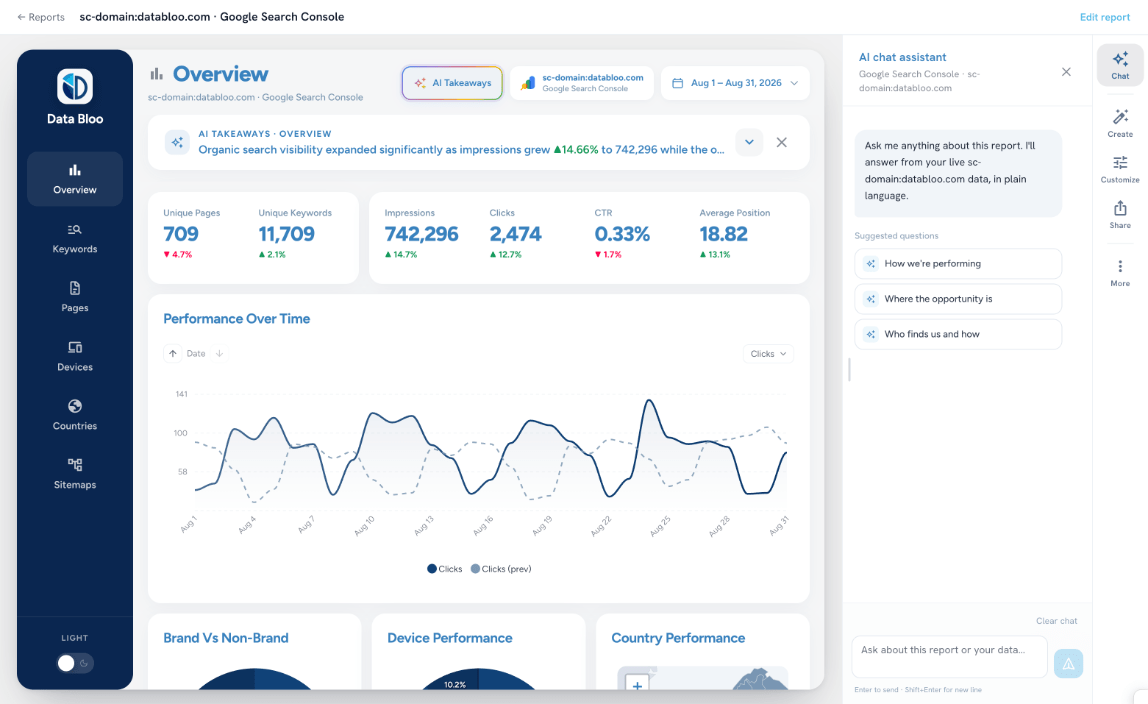
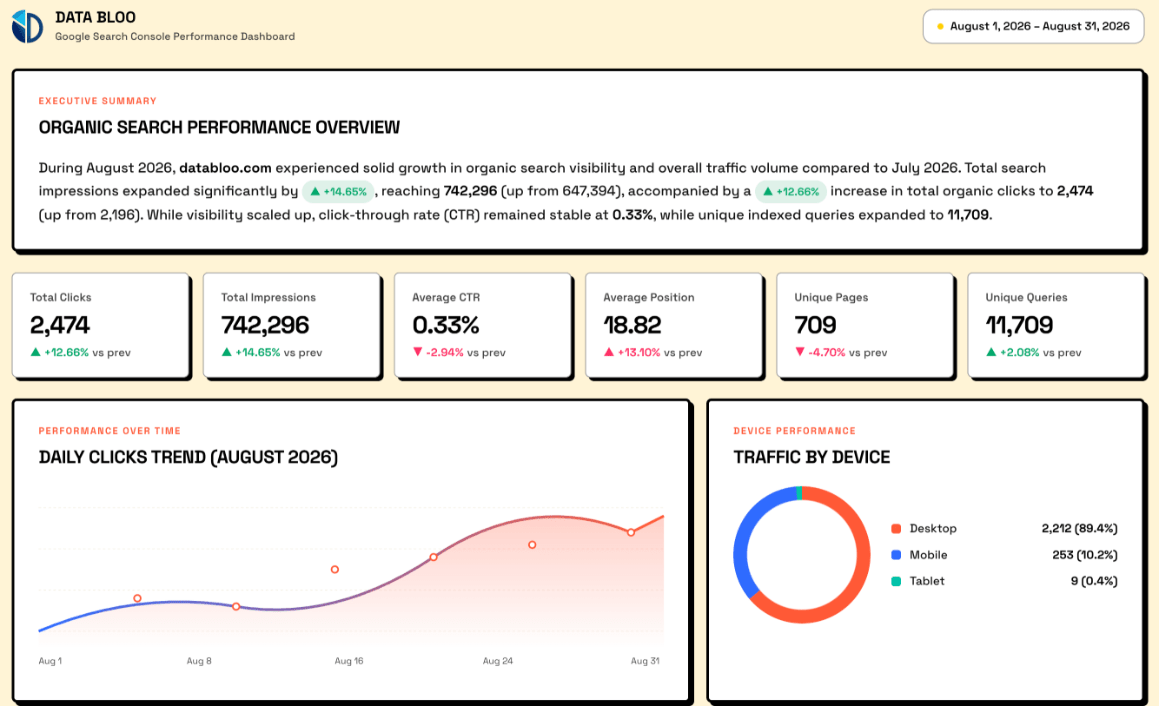
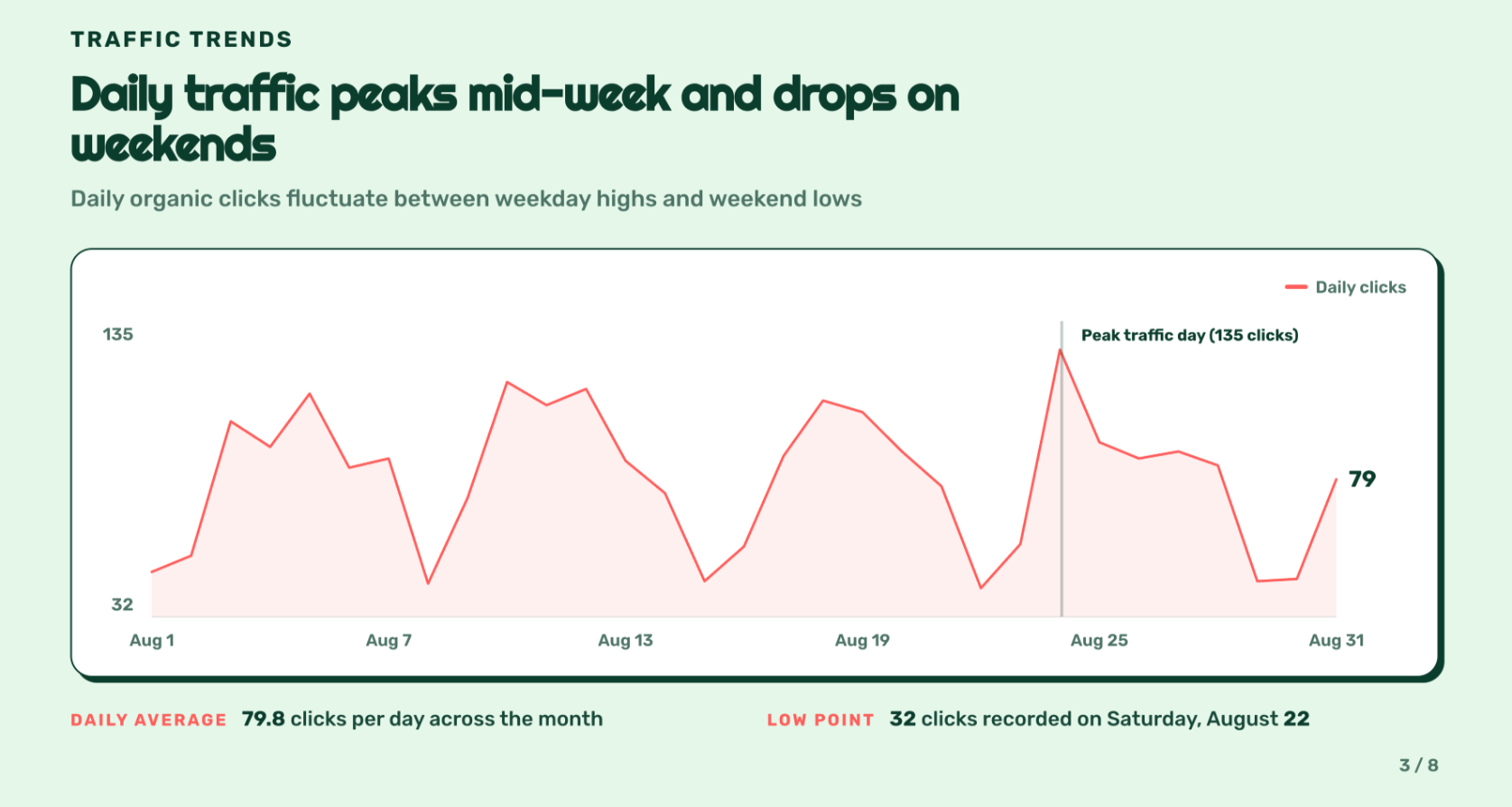
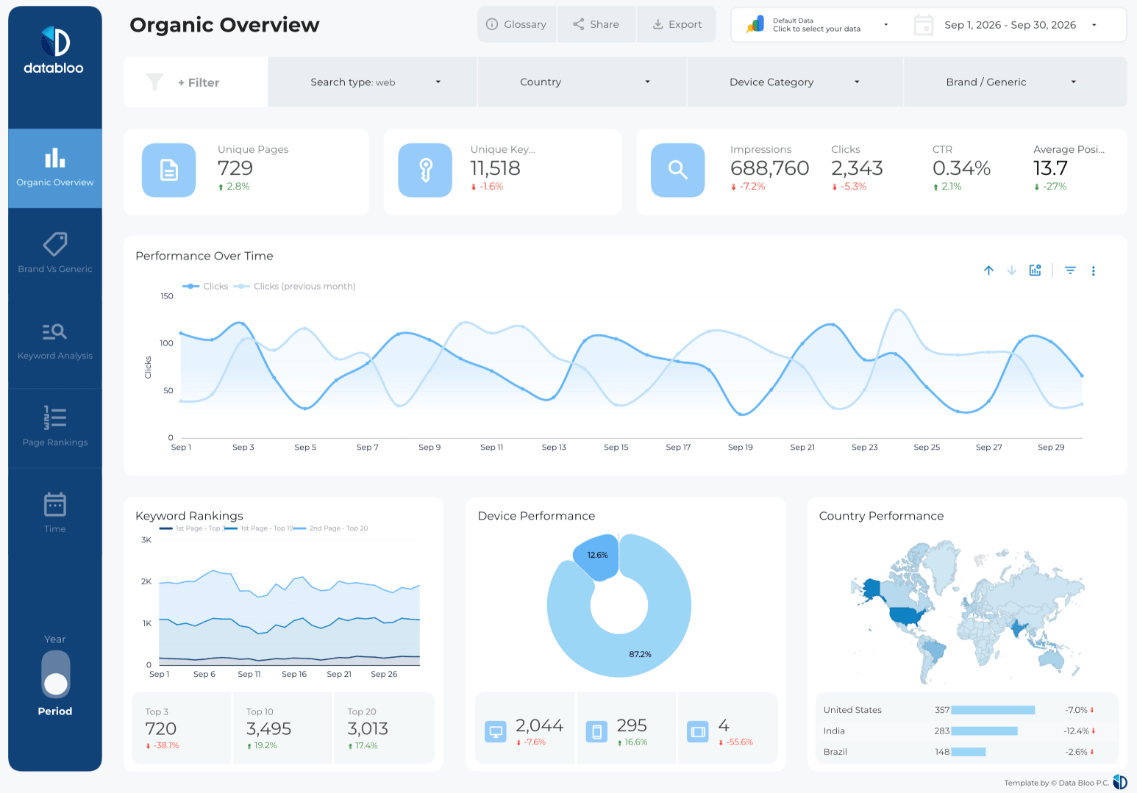
What Shopify data you can pull
The same metrics you use in your reports, sliced by product, order date, customer type, country and sales channel.
Orders, gross sales, net sales, total revenue and average order value, daily, weekly or monthly.
Customers split new vs returning, plus refunds and discounts, so net numbers tell the honest story.
Top products by revenue and units sold, spot your bestsellers and the SKUs quietly slipping.
Product, order date, customer type, country and sales channel, ask for any of them in plain language.
Prompts to paste into Claude
Once connected, drop any of these into a fresh chat. Name Data Bloo in your first message, then drill in.
Built for how you actually work
Same connection, different job to be done. Here's the prompt each type of store operator tends to start with.
E-commerce & DTC
Track revenue, AOV and top products daily, and line store revenue up against every ad channel for the ROAS number that actually matters.
Agencies
Pull and compare across every client store without switching logins, then draft the monthly report, ad spend and store revenue in one view.
Founders & operators
Skip the dashboard entirely. Get the Monday readout, orders, net sales, refunds, in one question, and dig deeper only when something looks off.
Common issues and fixes
You're likely not signed in yet, or Shopify isn't connected in Data Bloo. Ask "Using Data Bloo, list the accounts I have connected." If it comes back empty, open Data Bloo, confirm your Shopify source is connected, then try again.
Small gaps are normal. Shopify's analytics run on your store's timezone, refunds and edited orders land on different dates than the original sale, and recent figures keep updating as payments settle. For trends, comparisons and reporting the Data Bloo pull is solid; for the last few hours of a flash sale, your Shopify admin is freshest.
They're not supposed to. Gross sales are before discounts and refunds; net sales come after. If a number looks too high or too low, tell Claude which one you mean, "use net sales", and the comparison snaps into place.
That's on purpose. The connection is read-only, Claude can't edit products, fulfill orders or issue refunds through it. If you want AI agents selling your storefront, that's Shopify's Storefront MCP, not this.
Query notes & FAQs
"Shopify MCP" usually refers to Shopify's official MCP servers: the Storefront MCP, which lets AI shopping agents browse your catalog and build carts for customers, and the Dev MCP, which gives developers Shopify's docs and schemas inside tools like Claude Code. Neither is a reporting tool. To ask Claude about your own sales, orders and products, you connect through an analytics MCP like Data Bloo's.
It's free to start, no credit card. The free tier includes MCP access with usage limits; paid plans raise the limits and add more connected accounts.
No. All seven MCP tools are strictly read-only. Claude can pull and analyze your data but can never edit products, orders, prices or any store settings. Your storefront and checkout are untouched.
Yes. You sign in once through Data Bloo's secure OAuth flow, and the connection is strictly read-only. Claude can pull and analyze your Shopify data but can never change a product, cancel an order or touch your storefront.
Any MCP-compatible client, Claude Desktop, Web and Code, plus ChatGPT, and Gemini. The same URL works across all of them.
No. A free Claude account is enough to add the Data Bloo connector and start pulling Shopify reports. Your Claude plan is separate from Data Bloo, and the connector works on Claude Desktop, Web and Code.
Yes, and it's the best reason to connect. As long as they're connected in Data Bloo, ask Claude to line Shopify revenue up against Facebook Ads, Google Ads and TikTok Ads spend, or against GA4 sessions, and it pulls one blended answer, true ROAS from real store revenue.
No app from the Shopify App Store is required. You connect your store to Data Bloo once, the same connection used for Data Studio reports, and Claude reads through that. Nothing is added to your storefront or theme.
Claude queries your data live through Data Bloo's connectors the moment you ask, subject to each platform's API freshness and your plan's refresh limits.
Yes. Ask Claude to list your connected Shopify stores, and it can pull and compare across them, handy for agencies and multi-brand operators.
Yes. Pair the MCP with Claude's scheduled tasks or Claude Code for an automatic Monday-morning sales digest, anomaly alerts when orders dip, or a recurring client update, unattended.
Pick how many accounts. Everything else is included.
Every data source, every destination, the Data Bloo MCP and white-label reports come with every paid plan.


Chat with your Shopify store today
Connect Shopify to Claude in under 2 minutes and pull sales reports straight from the chat. Free to start, no credit card.