Table of Contents
Marketing performance metrics form the backbone of successful agency operations, yet many teams struggle with fragmented data and manual reporting processes. Without proper tracking systems, agencies miss critical insights that could drive client success and business growth.
Modern marketing agencies face an overwhelming challenge: managing dozens of campaigns across multiple platforms while delivering transparent, actionable report templates to clients. The solution lies in understanding which metrics matter most and implementing automated systems to track them effectively.
Why Marketing Performance Metrics Matter for Agency Success
Marketing agencies operate in a results-driven environment where client retention depends on demonstrable ROI. Traditional spreadsheet-based reporting creates bottlenecks that delay insights and limit strategic decision-making.
Consider Sarah’s digital marketing agency, which previously spent 15 hours weekly compiling client reports from various platforms. Manual data collection led to errors and delayed reporting, causing client dissatisfaction and lost opportunities for optimization.
Essential Marketing Performance Metrics for Agency Growth
Revenue-Driven Marketing Performance Metrics
Customer Acquisition Cost (CAC) represents the total investment required to acquire one new customer. Agencies tracking CAC across channels identify the most cost-effective marketing strategies for their clients.
Customer Lifetime Value (CLV) measures the total revenue expected from a single customer relationship. The CLV-to-CAC ratio provides crucial insights into campaign sustainability and profitability.
Return on Ad Spend (ROAS) directly connects marketing investments to revenue outcomes. Successful agencies maintain ROAS tracking across all paid campaigns to optimize budget allocation continuously.
Engagement and Performance Marketing Performance Metrics
Conversion rates reveal how effectively marketing efforts transform prospects into customers. Tracking micro-conversions (email signups, content downloads) alongside macro-conversions (purchases, subscriptions) provides comprehensive performance visibility.
Click-through rates (CTR) indicate content relevance and audience alignment. Low CTR often signals messaging misalignment or targeting issues requiring immediate attention.
Cost per lead (CPL) helps agencies evaluate lead generation efficiency across different channels and campaigns. Monitoring CPL trends enables proactive budget reallocation and strategy adjustments.
Brand Awareness and Reach Metrics
Impressions and reach metrics quantify brand visibility across marketing channels. While vanity metrics alone don’t drive business results, they provide valuable context for upper-funnel performance.
Social media engagement rates measure audience interaction quality beyond follower counts. High engagement rates typically correlate with stronger brand loyalty and higher conversion potential.
Brand mention tracking helps agencies monitor client reputation and identify emerging opportunities or threats requiring immediate response.
How Data Bloo Transforms Marketing Analytics for Agencies
Automated Data Integration
Data Bloo connects seamlessly with major marketing platforms through dedicated connectors, eliminating manual exports and spreadsheet consolidation. Agencies can unify paid media, analytics, SEO, and CRM data into one client-ready dashboard.
The platform’s real-time data synchronization ensures marketing performance metrics remain current, enabling agencies to make informed decisions quickly. Sarah’s agency now generates comprehensive reports in minutes rather than hours.
Customizable Dashboard Creation
Data Bloo’s intuitive dashboard builder allows agencies to create client-specific views highlighting the most relevant marketing performance metrics. Custom branding options ensure reports align with agency presentation standards.
Interactive visualizations transform complex data into easily digestible insights that clients understand and value. Automated alerts notify teams when metrics exceed predetermined thresholds, enabling proactive campaign management.
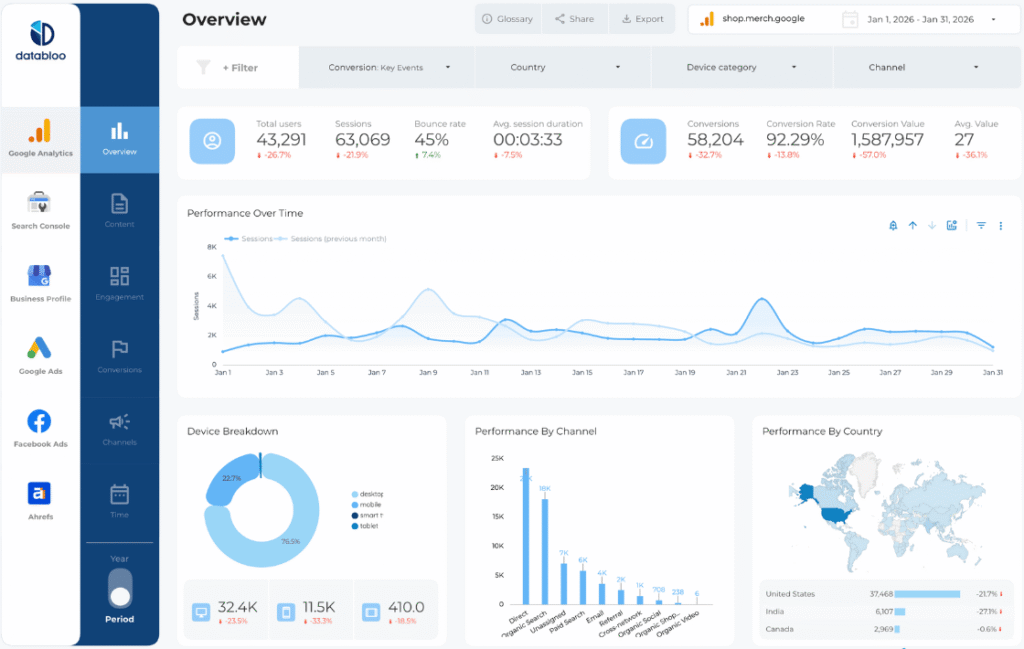
See a Real Example in Action
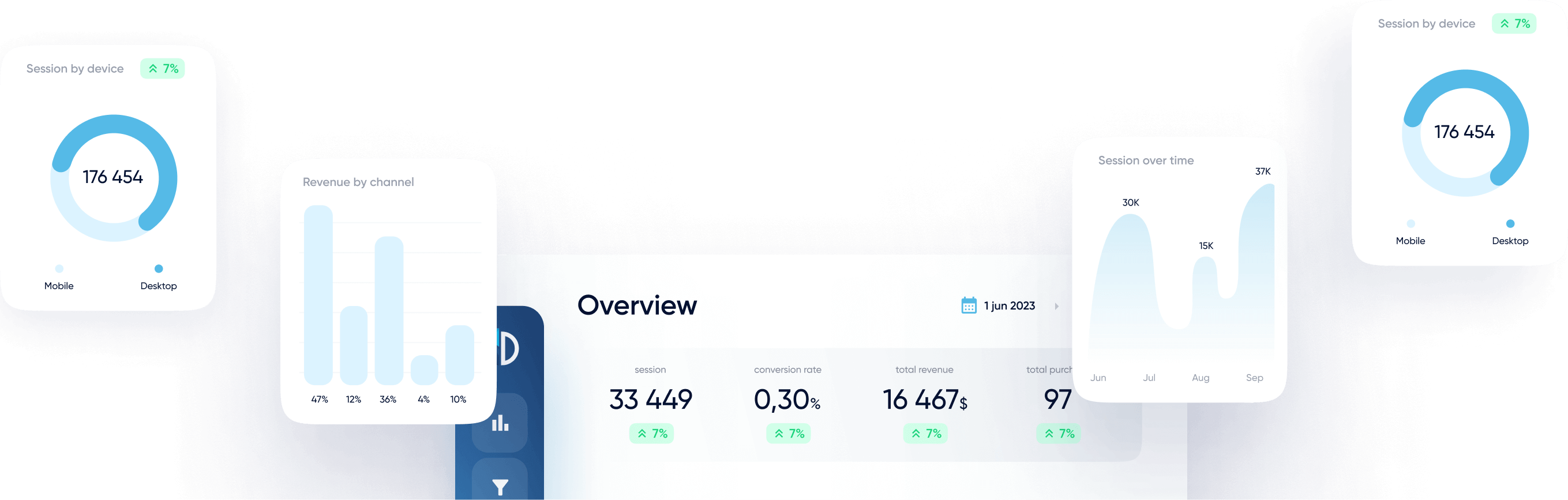
Below is a preview of the Custom Master Report Template used by agencies to unify paid media, analytics, and SEO performance into one executive-ready dashboard.
Advanced Reporting Capabilities
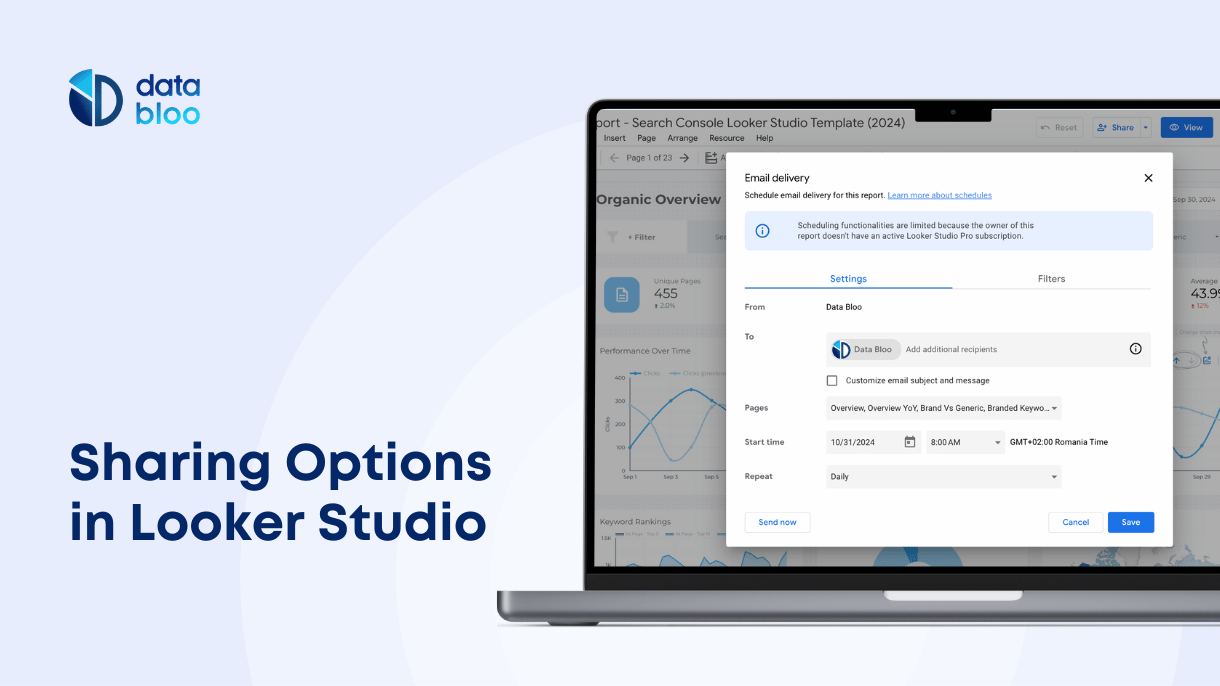
The platform’s automated reporting features generate scheduled client reports without manual intervention. Agencies can customize report frequency, format, and content to match client preferences and contract requirements.
Data Bloo’s comparative analysis tools help agencies identify trends, seasonal patterns, and optimization opportunities across multiple campaigns and time periods.
Implementing Effective Metrics Tracking Systems
Setting Up Tracking Infrastructure
Successful marketing performance metrics tracking begins with proper implementation of conversion tracking codes and analytics platforms. Consistent tagging conventions ensure data accuracy across all marketing channels.
Regular audit processes verify tracking functionality and data integrity. Monthly reviews help identify and resolve discrepancies before they impact client reporting or strategic decisions.
Creating Actionable Reporting Frameworks
Effective agency reports focus on metrics directly tied to client business objectives. Combining performance data with strategic recommendations transforms reports from data dumps into valuable business intelligence.
Standardized reporting templates streamline agency operations while ensuring consistent quality across all client communications. Visual hierarchies help clients quickly identify key insights and performance trends.
Optimizing Client Communication Through Data
Data transparency builds client trust and demonstrates agency value beyond campaign execution. Regular performance reviews using clear, relevant marketing performance metrics strengthen client relationships and reduce churn.
Proactive communication about metric changes, whether positive or negative, positions agencies as trusted advisors rather than service providers. This approach often leads to contract expansions and referral opportunities.
Conclusion
Marketing performance metrics provide the foundation for agency success, but manual tracking processes limit growth potential and client satisfaction. Agencies that embrace automated analytics platforms like Data Bloo gain competitive advantages through improved efficiency, accuracy, and client communication.
The transformation from manual reporting to automated insights enables agencies to focus on strategy and optimization rather than data collection. As the marketing landscape becomes increasingly complex, agencies with robust metrics tracking systems will thrive while others struggle with operational inefficiencies.
Explore ready-to-use marketing templates or connect your data sources instantly with automated connectors.
Build faster. Report smarter. Scale confidently.
FAQs
1. What are the most important marketing performance metrics for small agencies?
Small agencies should prioritize CAC, ROAS, conversion rates, and client retention metrics. These core measurements directly impact profitability and demonstrate value to clients without overwhelming limited resources.
2. How often should agencies review and report marketing performance metrics?
Most clients expect monthly comprehensive reports with weekly performance updates for active campaigns. Critical metrics like ad spend and conversion rates should be monitored daily to enable quick optimizations.
3. Can Data Bloo integrate with existing agency tools and platforms?
Yes, Data Bloo connects with major marketing platforms including Google Ads, Facebook Ads, analytics tools, and more. The platform supports custom integrations for agencies with unique technology requirements.
4. What’s the difference between vanity metrics and actionable marketing performance metrics?
Actionable metrics directly connect to business outcomes and drive decision-making, while vanity metrics look impressive but don’t influence strategy. Focus on metrics that impact client revenue and business growth.
5. How can agencies use marketing performance metrics to retain clients longer?
Transparent reporting of relevant metrics builds trust and demonstrates ongoing value. The Custom Master Template enables agencies to present professional, branded reports that showcase performance trends and optimization recommendations. Agencies using automated reporting templates typically achieve higher client retention rates. Get the report template to see how professional presentation impacts client relationships.