Table of Contents
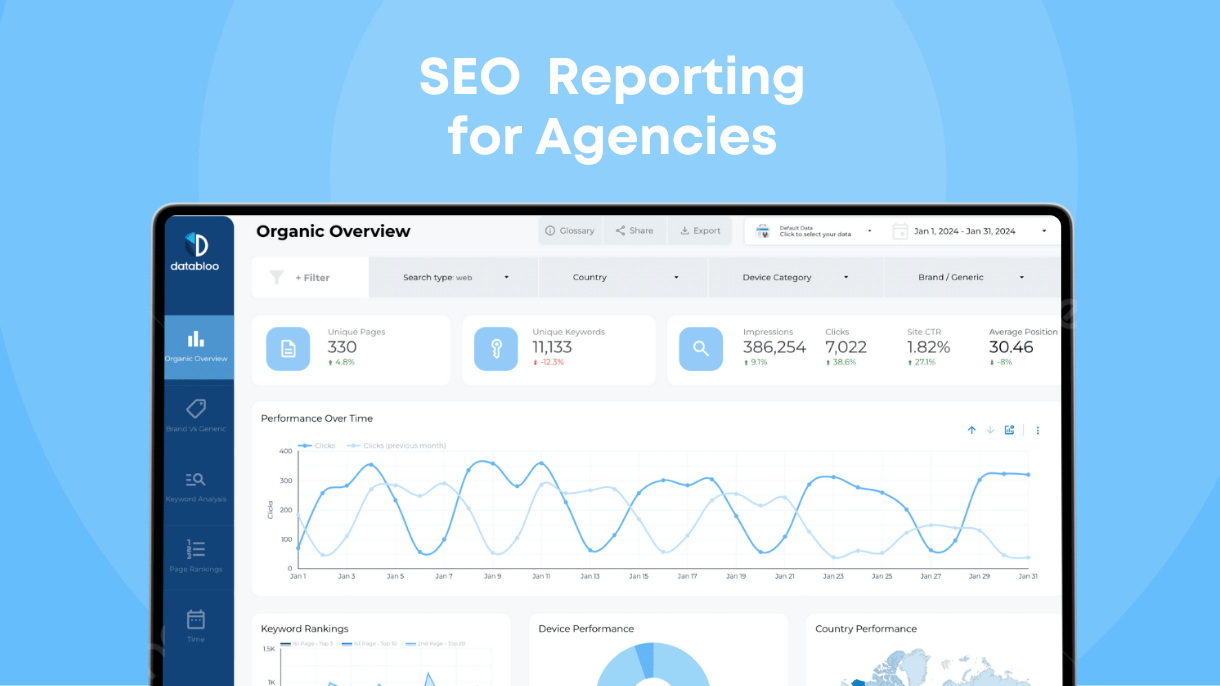
SEO reporting is one of the most common headaches and one of the most overlooked opportunities for digital marketing agencies in 2026. Clients are craving visible results, and they want them now. The challenge is that it’s not enough for agencies to deliver great SEO performance, they need to communicate that success in a way that’s fast, visual, and easily digestible.
Effective SEO reporting for agencies can help you nail that. In our guide, we’ll walk you through everything your agency needs to know about SEO reporting this year. If you’re just getting started reporting or you’re an agency that has already jumped into reporting on dozens of accounts, you will have a few new tricks to optimize your reporting game and stand out from the crowd.
Why SEO Reporting for Agencies Matters More Than Ever in 2026
SEO has changed a lot over the past few years. Google’s frequent algorithm updates, the emergence of AI-powered search tools, and the growing demand for ROI-driven marketing solutions all mean that your clients want to see how their SEO investment is paying off. That’s why quality marketing reporting for SEO agencies is no longer optional; it’s a requirement!
The best reports tell a story. They show progress, validate your approach, and give your clients the confidence they need to know that you’re making a real and measurable impact.
What Makes Great SEO Reporting for Agencies?
Marketing reporting for SEO agencies should feel like a guided tour and not a data dump. A strong report connects strategy to outcome and explains what was done, what changed, and what has to happen next. Different clients have different priorities, but the fundamentals remain the same.
Your SEO report should have clear summaries of traffic changes, keyword rankings, conversion performance, and technical site health. It should break down exactly what actions were taken and how those efforts affected performance over time.

The most important point of all is that the report needs to be understandable. Clients don’t want to decipher complicated dashboards or raw analytics; they want transparency.
The easiest way to do this is to add commentary, insights, and the data. This will also make your agency look more strategic.
Key Metrics Every SEO Report Should Include
SEO is measurable in dozens of different ways. But there are a handful of main SEO metrics that most clients actually care about. These should be the backbone of your SEO reporting if you’re keeping it simple and client-friendly.
Clients want to know about organic traffic first and foremost. How many visitors are coming from search, and how is that trending from month to month? Keyword rankings are also a quick way to gauge visibility while the CTR from SERPs indicates how effective that visibility is.
Conversions are the holy grail when it comes to reporting for SEO. After all, increased traffic is only nice to show, but demonstrating ROI through actual form fills, purchases, and phone calls is what clients care about.
Reporting backlinks gained, technical errors fixed, content performance, and site speed improvements are all great, too! Clients are likely not paying attention to these parts of SEO, but they matter.
Customizing Reports Based on Client Needs
Every business isn’t going to be gauging their success in the same way. A local hair salon cares a lot more about their Google Business profile impressions and map views.
While a SaaS business wants to know about MQLs and traffic at each funnel stage. Which is why “one-size fits all” reports rarely cut it.
Customizing your SEO reports to your client’s industry, business model, and campaign goals is one of the best ways to add value. It’s a great way to demonstrate that you understand and appreciate their unique objectives.
For example, a client that is in eCommerce should have performance by product category, mobile traffic trends, and organic revenue as report staples. Meanwhile, a B2B brand will likely want more insight into long-tail keywords and lead quality.
If you’re managing multiple clients, blending data sources, or need advanced KPI modeling, you may need something fully custom.
Custom SEO Dashboard by Data Bloo
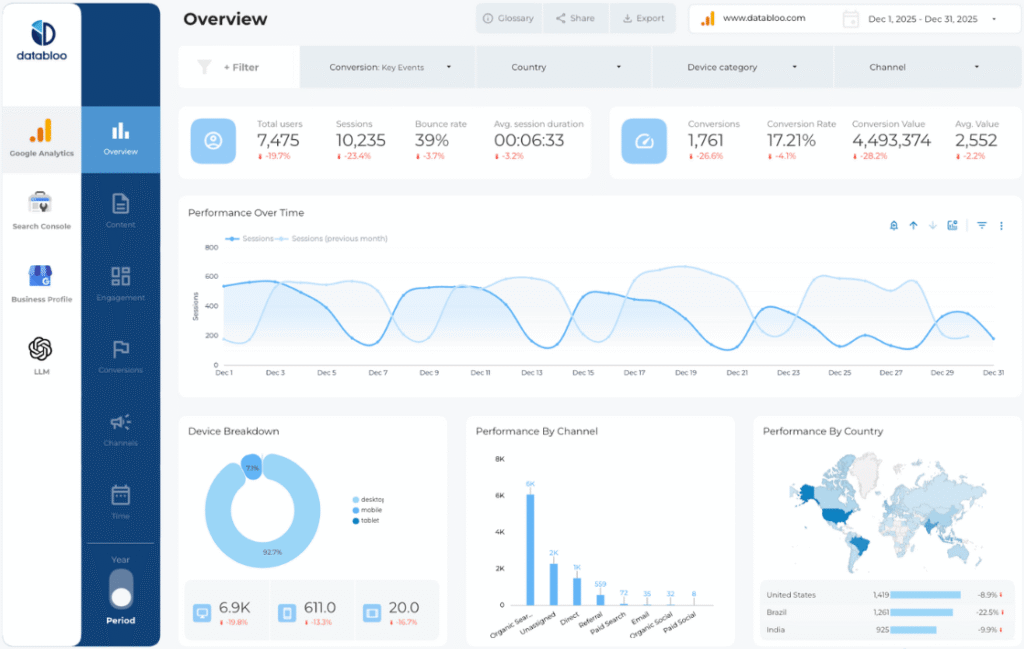
- Select the data sources you rely on — we handle the integration
- Combine SEO, paid media, and revenue data in one ecosystem
- Build dashboards aligned with your exact KPIs
- Scalable architecture for multi-client reporting
Choosing the Right SEO Reporting Tools for Agencies
SEO reporting tools for agencies are many and varied, so choose wisely. The name of the game is automation in 2026. You want an agency SEO reporting tool that can take in data from other sources, visualize it beautifully, and add your own insights without forcing you to rebuild from scratch with each report.
Popular products among agencies and freelancers today include solutions like AgencyAnalytics, SE Ranking, and Looker Studio. Products have different levels of strength in certain areas, such as white-label branding, working with third-party data sources, and scheduling automation.
SEO agency metrics can also be reported by combining tools. You might extract data from Ahrefs or SEMrush for keyword and backlink information, for example, but use Google Analytics 4 and Search Console for traffic and engagement. The key is to use tools that allow your team to scale reporting for dozens of clients rather than spending hours on manual updates.
Many agencies connect Google Search Console directly to Looker Studio to automate keyword and page reporting — but building the dashboard from scratch takes time and technical setup.
Instead of building from scratch every time, you can use a ready-made dashboard designed specifically for SEO agencies.
All-in-One Search Console Looker Studio Template
How to Present SEO Reports That Clients Actually Read
Even the best data won’t mean much if your client doesn’t understand it, or worse, doesn’t look at it. That’s why presentation matters. Your SEO report should be well organized, visually appealing, and divided into sections.
Begin with a very short executive summary and have a bullet list of most important points using plain English. If the client can grasp the big picture in less than a minute, they will be glad they read on. From there you can go into as much detail as you want, but always include short explanations and interpretation with each chart or table.
Include trend lines, pie charts, and traffic flow diagrams to liven it up. Clients always like to know what you are doing next and what to expect in the upcoming weeks.
How Often Should Agencies Send SEO Reports?
Some popular clients may want to see biweekly reports, especially in the early stages of a campaign where clients are itching to see results. Other clients may be fine with a quarterly deep-dive, as long as there is healthy communication in between. Either way, it’s a good idea to set those expectations upfront and commit to a goal your team can realistically keep.
Using SEO Reporting for Agencies to Build Stronger Client Relationships
SEO reports aren’t just a way for your agency to demonstrate value to the client, they’re an opportunity to build the relationship as well. When done right, reporting creates transparency, builds trust, and opens the door for strategic discussions.
Don’t just email the client the report and check off that box. Set up recurring review calls where you walk through the numbers, answer questions, brainstorm insights, and discuss next steps. This level of service helps clients feel like you’ve got their back and your agency is invested and proactive.
Clients are much more likely to renew your contract, recommend your services, and increase their budgets when they know you’ll be there to support them every step of the way. SEO reports can play a big role in that process.
Scaling Your SEO Reporting Process as You Grow
Reporting can be one of the first things to suffer when your agency is juggling many clients. You need systems that can scale from day one, standardize on templates, automate data pulls, and train your team in the tools you use.
Using templates doesn’t mean your reports have to feel generic. You can include customized sections, commentary, and branding to craft a more personalized experience. The key is finding the right balance between efficiency and personalization.
Hiring or training someone to do SEO reporting full-time is another option that becomes more practical as you grow your client roster. They can make sure there’s consistency, quality, and free up more time for strategists to focus on performance.
What the Future of SEO Reporting Looks Like
AI is already transforming the digital marketing industry and there’s no sign of that slowing down. So, what does the future of SEO reporting look like? Stay tuned for real-time dashboards, predictive analytics, and closer cross-channel collaborations that will allow agencies to provide more forward-thinking reporting.
One thing that won’t change is the need for a human touch. AI tools might be smarter than ever, but at the end of the day, clients still need to sit down with someone to make sense of it all. Agencies that can pair the very best technology with expert storytelling will be the ones that succeed.
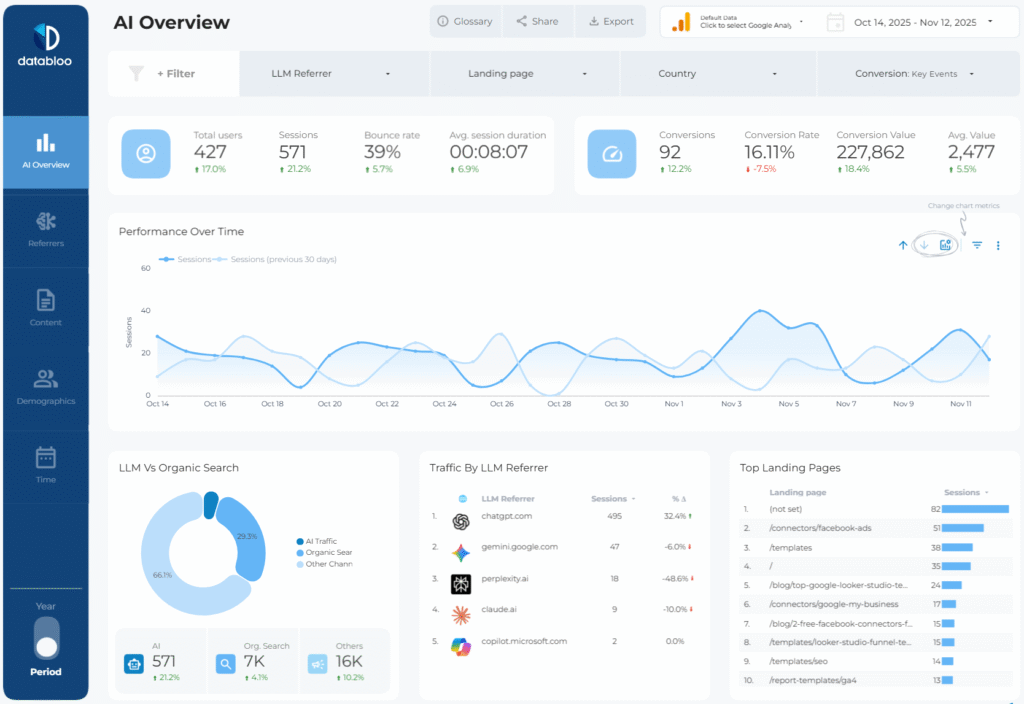
Monitor AI-driven search trends and emerging query patterns in one executive-ready dashboard.
AI & LLM Looker Studio Report Template
SEO Reporting for Agencies: FAQs
1. What should I include in an SEO report for clients?
SEO reports should provide insights into the most critical metrics, organic traffic trends, keyword rankings, conversion data, site health updates, backlink acquisition, and actionable recommendations. It’s about demonstrating results while also showing your client how and why your SEO is working.
2. What are the best SEO reporting tools for agencies in 2026?
There are several tools that agencies have access to these days that offer pretty good reporting functionality. AgencyAnalytics, SE Ranking, Looker Studio, SEMrush, and more are some that come to mind. But there’s no such thing as a “best” reporting tool, because your best fit will be the one that works with your tech stack and lets you automate, customize, and scale your reports.
3. How often should I send SEO reports to clients?
Monthly is typical, but some clients may need or want more frequent reporting. Clarify this during the onboarding process and then tweak as needed.
4. How can I make my SEO reports more client-friendly?
Translate raw data into visuals, summaries, and natural-language explanations. Give it a clear purpose that the client understands. Don’t forget to include actionable next steps or recommendations so the client always has a clear idea of what you’re doing and will do going forward.
5. Can SEO reporting help me keep clients?
Absolutely. Reporting can not only be a way to showcase your value, it’s a way to build trust and keep the lines of communication open. If a client feels like they’re in the loop and can see results, they’re much more likely to keep working with you.